Author: Laser Lines Editorial Team
Published: 17 August 2026
Category: Laser Welding | Applications
Introduction
Laser welding is used across a wide range of manufacturing industries where precision, repeatability and controlled heat input are important.
From automotive components and EV batteries to aerospace parts, medical devices, electronics and precision engineering, laser welding can provide a highly controlled way of joining metals and other suitable materials.
But where exactly is laser welding used, and what makes it suitable for these applications?
Laser welding is primarily used for joining precision components, thin materials, electrical connections, structural assemblies and high-value parts where accurate, repeatable welds and controlled heat input are required.
This guide explains the main laser welding applications, the industries that use the technology, examples of components that can be laser welded and the benefits the process can provide.
What is laser welding?
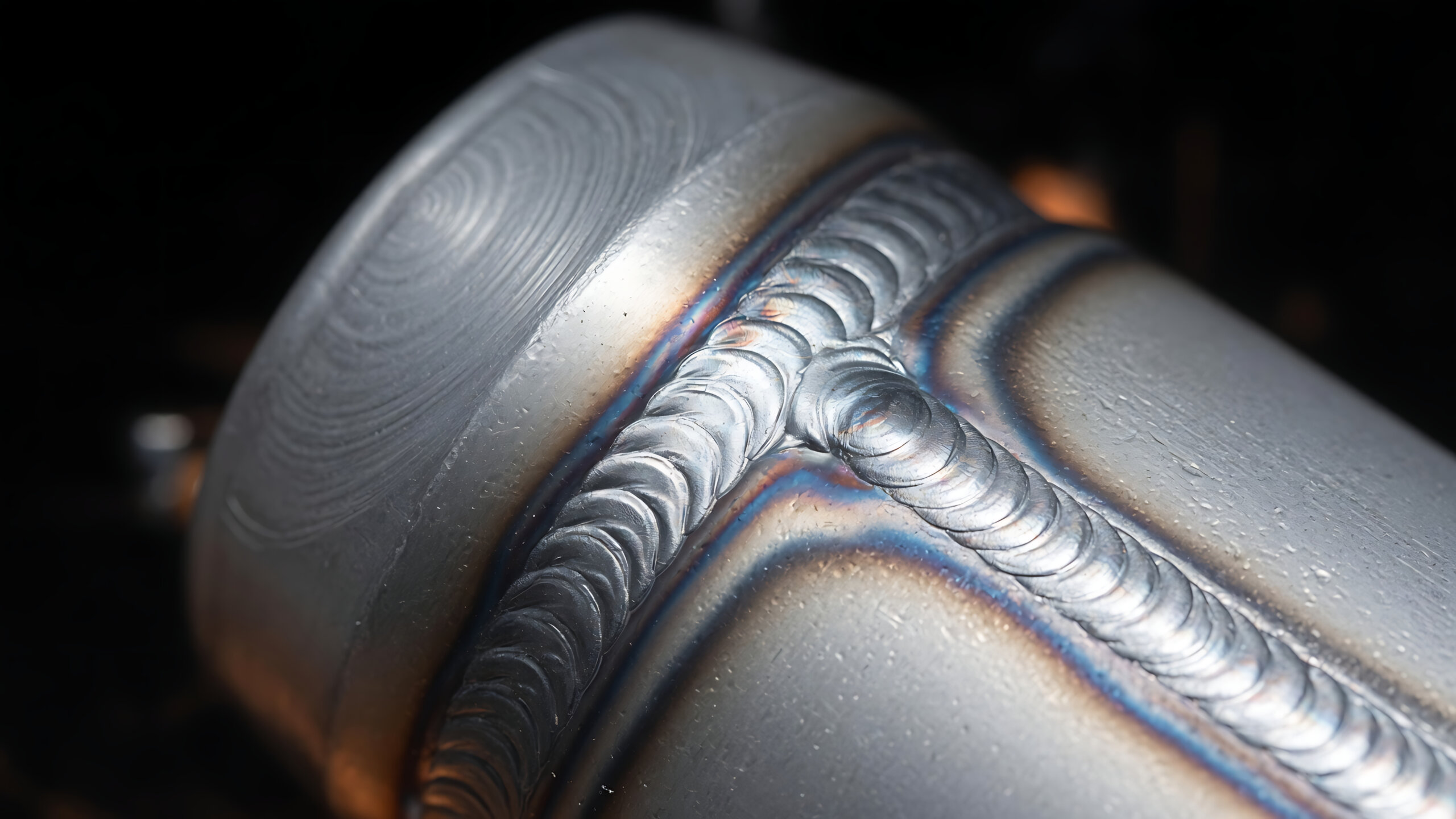
Laser welding is a fusion welding process that uses a focused laser beam to generate heat and join two or more materials.
The laser concentrates energy into a small area, allowing manufacturers to control where heat is introduced into the component.
Depending on the application and process parameters, laser welding can produce shallow conduction welds or deeper keyhole welds.
The technology can be used manually or integrated into CNC machines, robotic systems and automated production lines.
This combination of precision and automation makes laser welding particularly useful for manufacturing applications where consistency and process control are important.
Where is laser welding used?
Laser welding is used across many industries, including:
- Automotive manufacturing
- Electric vehicle manufacturing
- Aerospace
- Medical device manufacturing
- Electronics
- Electrical engineering
- Battery manufacturing
- General engineering
- Precision manufacturing
- Jewellery manufacturing
- Tool and mould manufacturing
- Energy and power equipment
The specific application depends on the material, component geometry, thickness, production volume and required weld characteristics.
1. Automotive laser welding applications
The automotive industry is one of the major application areas for laser welding.
Modern vehicles contain thousands of components, including bodywork, electrical assemblies, sensors, brackets, battery systems and precision mechanical parts.
Laser welding can be used where manufacturers need controlled heat input, accurate weld placement and repeatable production.
Examples of automotive laser welding applications
Potential applications include:
- Automotive body components
- Brackets
- Sensors
- Electrical connectors
- Battery components
- Battery tabs
- Busbars
- Lightweight assemblies
- Sheet-metal components
- Precision mechanical parts
The growth of electric vehicles has also created new applications for laser welding, particularly around battery and electrical manufacturing.
Read more: Laser Welding for Automotive Manufacturing: Applications, Benefits & Examples
2. EV battery and battery manufacturing
Battery manufacturing is an increasingly important application for laser welding.
Battery systems contain numerous electrical and structural connections that require precise and repeatable joining.
Laser welding can be considered for applications involving:
- Battery cells
- Battery tabs
- Terminals
- Busbars
- Electrical connections
- Battery modules
- Battery packs
- Battery enclosures
Materials such as copper and aluminium are particularly important in battery manufacturing.
Because laser welding can deliver energy to a relatively small area, it can be useful where manufacturers need to control heat transfer into surrounding battery components.
However, battery welding requires careful process development. Laser power, wavelength, spot size, pulse characteristics, welding speed, joint design and material condition can all affect the result.
3. Aerospace laser welding applications
Aerospace manufacturing places significant emphasis on precision, repeatability and controlling component weight.
Laser welding can be used for suitable aerospace components where accurate joining and controlled heat input are important.
Potential applications include:
- Lightweight structures
- Precision sheet-metal assemblies
- Heat exchangers
- Fluid-system components
- Electrical components
- Sensors
- Engine components
- Enclosures
- Brackets
- Precision mechanical assemblies
Materials used in aerospace manufacturing can include aluminium, titanium, stainless steel and specialist alloys.
Laser welding can be particularly useful for thin materials and precision components where excessive thermal distortion could affect dimensional accuracy.
Read more: Laser Welding for Aerospace Components: Applications & Benefits
4. Medical device laser welding applications
Medical device manufacturing is another area where precision laser welding can be valuable.
Medical components can be small, complex and manufactured from materials such as stainless steel, titanium and other specialist alloys.
Potential applications include:
- Surgical instruments
- Medical tubing
- Catheters and associated components
- Medical sensors
- Housings
- Implant components
- Precision instruments
- Small medical assemblies
The small, concentrated heat source of laser welding can help manufacturers join small components while limiting heat transfer to surrounding areas.
For medical manufacturing, the welding process must of course be developed and controlled according to the requirements of the particular component and applicable manufacturing standards.
5. Electronics laser welding applications
Electronic components can be particularly sensitive to excessive heat.
Laser welding can provide a highly localised heat source, making it suitable for some applications where conventional welding processes could transfer unwanted heat into nearby components.
Potential applications include:
- Electrical connectors
- Terminals
- Sensors
- Electronic housings
- Switches
- Small electrical assemblies
- Battery connections
- Precision contacts
Laser welding can also be integrated into automated production equipment, making it suitable for repeatable high-volume manufacturing.
6. Electrical component welding
Electrical engineering applications often require reliable connections between conductive materials.
Laser welding can be used for suitable electrical components where manufacturers need precise weld placement and controlled heat input.
Examples include:
- Busbars
- Terminals
- Connectors
- Copper components
- Aluminium components
- Electrical contacts
- Motor components
- Transformer-related assemblies
Copper can be challenging to weld because of its high reflectivity and thermal conductivity.
The appropriate laser system and process parameters therefore need to be selected according to the specific application.
7. Precision engineering applications
Laser welding is well suited to precision manufacturing because the laser can be focused onto a relatively small area.
This can be useful for components where:
- Weld dimensions are small
- Heat input must be controlled
- Distortion needs to be minimised
- Components have tight tolerances
- Weld appearance is important
- Production needs to be repeatable
Examples include:
- Precision mechanisms
- Small mechanical assemblies
- Instrument components
- Sensors
- Specialist engineering parts
- Small housings
- Fine sheet-metal assemblies
8. Jewellery laser welding applications
Laser welding is also used in jewellery manufacturing and repair.
The ability to deliver energy to a small area can allow jewellers to work close to delicate features and stones where conventional welding or soldering could introduce unwanted heat.
Potential applications include:
- Jewellery repair
- Ring resizing
- Chain repair
- Setting repairs
- Fine detail work
- Precious metal joining
- Watch components
Compact laser welding systems are often suited to these applications because they allow the operator to position the workpiece precisely.
9. General metal fabrication
Laser welding can also be used in general engineering and metal fabrication.
Applications may include:
- Sheet-metal assemblies
- Enclosures
- Cabinets
- Brackets
- Frames
- Machinery components
- Fabricated assemblies
- Stainless-steel components
Whether laser welding is suitable depends on the thickness, material, joint configuration and required production speed.
For thicker materials or applications where precision is less important, conventional welding processes may remain more appropriate.
10. Tool and mould manufacturing
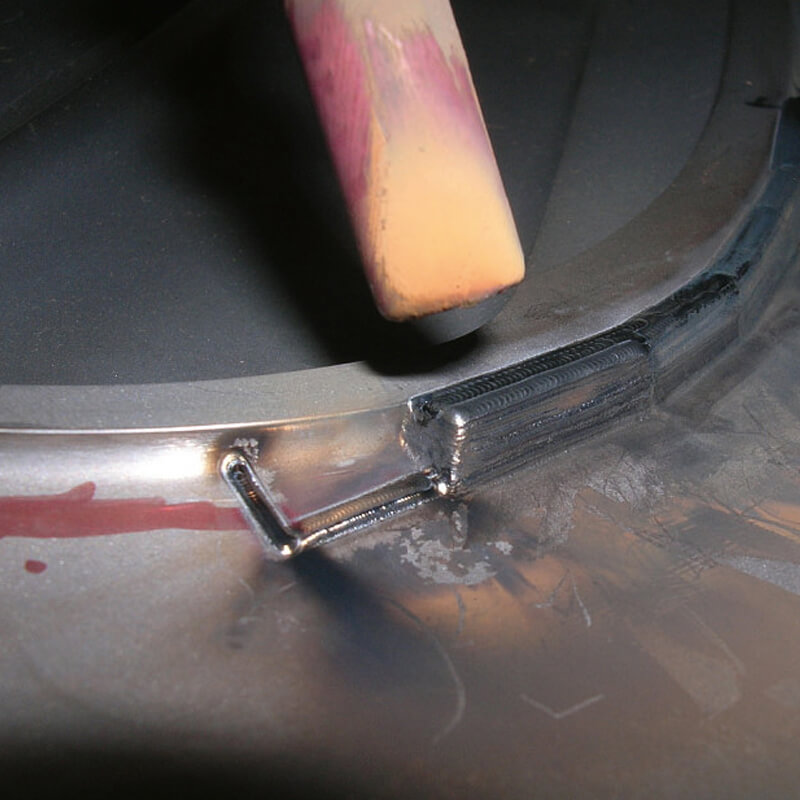
Laser welding can be useful for repairing and modifying tools, moulds and dies.
The concentrated laser beam can allow material to be deposited or joined in relatively small areas.
Potential applications include:
- Mould repair
- Die repair
- Tool refurbishment
- Edge repair
- Surface restoration
- Precision modifications
This can be particularly useful when manufacturers need to repair a localised area without significantly affecting the surrounding material.
11. Sensors and instrumentation
Sensors often contain small components and delicate assemblies.
Laser welding can provide the precision needed for certain sensor manufacturing applications.
Examples include:
- Pressure sensors
- Temperature sensors
- Automotive sensors
- Industrial sensors
- Flow sensors
- Measurement devices
The ability to produce small welds can be advantageous where component dimensions are limited.
12. Heat exchangers and thermal-management components
Laser welding can be considered for suitable heat exchangers and thermal-management assemblies.
These components can contain thin sections, closely spaced features and complex geometries.
Laser welding may provide benefits including:
- Precise weld placement
- Controlled heat input
- Repeatability
- Low distortion
- Automation potential
The specific welding process depends on the material, component design and required joint performance.
What materials can be laser welded?
Laser welding can be applied to a broad range of metals and alloys.
Common examples include:
Stainless steel
Stainless steel is widely used in engineering, medical, automotive and other industrial applications.
Laser welding can produce precise welds with controlled heat input and relatively small heat-affected zones.
Aluminium
Aluminium is widely used where low weight is important.
Its high thermal conductivity and reflective properties can make it more challenging to laser weld than some steels, so process parameters need to be carefully developed.
Copper
Copper is important in electrical, battery and electronics applications.
Its high thermal conductivity and reflectivity present particular challenges for laser welding.
Titanium
Titanium is used in aerospace, medical and other specialist applications.
Laser welding can provide precise heat input, but appropriate shielding and process control are important.
Mild and carbon steels
Steel remains widely used across manufacturing.
Laser welding can be used for suitable steel components ranging from thin sheet metal to precision mechanical assemblies.
Nickel alloys can be found in applications where high-temperature performance and other specialist material properties are required.
Nickel-based alloys
Laser welding can be considered for suitable components depending on alloy composition and application requirements.
What are the main benefits of laser welding?
1. Precision
The laser beam can be focused onto a small area, allowing manufacturers to produce highly localised welds.
This makes laser welding particularly useful for small components and precision assemblies.
2. Controlled heat input
Laser welding concentrates heat at the joint rather than heating a large surrounding area.
This can help reduce unwanted thermal effects in suitable applications.
3. Reduced distortion
The relatively small heat-affected area can help minimise distortion compared with some conventional welding processes.
The actual level of distortion depends on the material, thickness, joint design and welding parameters.
4. Repeatability
Laser welding parameters can be programmed and reproduced, particularly when the system is integrated into CNC or automated equipment.
This can help manufacturers achieve consistent production results.
5. Speed
Laser welding can achieve high welding speeds in suitable applications.
The achievable speed depends on the material, thickness, laser power, joint geometry and required weld characteristics.
6. Automation
Laser welding can be integrated into automated manufacturing systems.
This can include:
- CNC machines
- Robotic systems
- Automated production lines
- Dedicated welding workstations
- Custom manufacturing equipment
7. Small welds
The focused laser beam allows manufacturers to create relatively small welds.
This can be valuable for:
- Electronics
- Medical devices
- Sensors
- Battery components
- Jewellery
- Precision engineering
8. Reduced post-processing
In suitable applications, laser welding can produce clean and controlled welds that require less subsequent finishing.
The actual finishing requirements depend on the component and the required surface appearance.
Is laser welding suitable for every application?
No. Laser welding is not automatically the best welding process for every component.
The technology is particularly attractive where manufacturers need precision, controlled heat input, repeatability or automation.
However, conventional processes such as TIG, MIG/MAG, resistance welding and brazing can still be more appropriate for certain applications.
Factors that should be considered include:
- Material
- Material thickness
- Joint design
- Required penetration
- Production volume
- Welding speed
- Component tolerances
- Required automation
- Equipment cost
- Required weld quality
Application testing is therefore an important part of selecting the right welding process.
What types of laser welding systems are available?
Laser welding equipment ranges from compact manual machines to fully automated production systems.
Manual laser welding systems
Manual systems allow an operator to position and manipulate components during welding.
They can be useful for:
- Prototyping
- Repair
- Low-volume manufacturing
- Specialist fabrication
- Small components
CNC laser welding systems
CNC systems provide programmable movement and repeatable welding paths.
They can be useful for manufacturers producing consistent components in larger quantities.
Automated and integrated laser welding systems
Laser sources can also be integrated into automated production lines.
These systems can combine laser welding with:
- Robotics
- Automated handling
- CNC positioning
- Fixtures
- Vision systems
- Process monitoring
The appropriate configuration depends on production requirements.
Which SISMA laser welding systems are available from Laser Lines?
Laser Lines supplies a range of SISMA laser welding systems, covering manual, CNC and integrable applications.
SISMA SL Series
The SISMA SL Series is designed for integration into automated production processes.
It can be considered where manufacturers need to integrate laser welding into existing or new production equipment.
SISMA SW-S / SW-T
The SISMA SW-S and SW-T are CNC laser welding workstations designed for programmable and repeatable welding applications.
SISMA LM-D
The SISMA LM-D is a compact manual laser welding system suitable for smaller components, development work and applications requiring operator-controlled welding.
Explore the complete SISMA range
View SISMA laser welding systems from Laser Lines
How do you choose a laser welding machine?
Choosing a laser welder starts with the application rather than the machine.
Consider:
Material
What material or materials need to be joined?
Thickness
How thick are the components?
Joint design
What type of joint needs to be produced?
Required weld penetration
Does the application require a shallow weld or deeper penetration?
Production volume
Is the system being used for prototypes, low-volume manufacturing or high-volume production?
Automation
Does the process need to be manual, CNC-controlled, robotic or integrated into a production line?
Required precision
How accurately does the laser need to be positioned?
Process monitoring
Does the application require monitoring or data collection during welding?
Frequently Asked Questions
What is laser welding used for?
Laser welding is used to join precision components, sheet metal, electrical connections, batteries, automotive parts, aerospace components, medical devices, electronics, jewellery and many other suitable metal assemblies.
What industries use laser welding?
Industries that use or can benefit from laser welding include automotive, aerospace, medical device manufacturing, electronics, electrical engineering, battery manufacturing, jewellery, general engineering and precision manufacturing.
What are the most common laser welding applications?
Common applications include automotive components, EV batteries, electrical connections, precision engineering, medical devices, aerospace components, sensors, sheet-metal assemblies and jewellery.
What metals can be laser welded?
Common laser-weldable metals include stainless steel, mild steel, aluminium, copper, titanium and various specialist alloys. Suitability depends on the material grade, thickness, joint design and laser welding process.
Is laser welding suitable for thin metal?
Yes. Laser welding can be particularly useful for thin materials because the laser can deliver energy to a relatively small area. Correct parameter development is important to prevent excessive penetration, burn-through or distortion.
Can laser welding be automated?
Yes. Laser welding can be integrated with CNC machines, robotics and automated production lines. Automation can provide repeatable welding paths and process parameters.
Is laser welding better than TIG welding?
Not always. Laser welding can offer advantages in precision, speed, heat control and automation, while TIG can be more appropriate for some materials, joint designs and lower-volume applications.
Is laser welding suitable for copper?
Laser welding can be used for suitable copper applications, particularly in electrical, battery and electronics manufacturing. Copper’s high reflectivity and thermal conductivity can make the process more challenging, so laser selection and parameter development are important.
Is laser welding suitable for aluminium?
Yes, aluminium can be laser welded in suitable applications. Its thermal conductivity and reflectivity mean that the laser process needs to be carefully developed for the material, thickness and joint configuration.
How much does a laser welding machine cost?
The cost varies considerably depending on laser power, machine configuration, automation, motion system, safety equipment and application requirements. A manual system can have very different costs from a fully automated production cell.
How do I choose a laser welding machine?
Start by defining the material, thickness, joint design, required weld characteristics, production volume and level of automation. Application testing can then be used to determine the appropriate laser power and system configuration.
Can Laser Lines help with laser welding applications?
Yes. Laser Lines supplies laser welding systems and can help manufacturers evaluate laser welding technology for specific materials, components and production requirements.
Contact Laser Lines about a laser welding application
Conclusion
Laser welding is used across a wide range of industries where precision, controlled heat input, repeatability and automation are important.
Applications range from automotive and aerospace manufacturing to EV batteries, medical devices, electronics, electrical components, jewellery and precision engineering.
The right laser welding process depends on the application. Material, thickness, joint design, required penetration, production volume and automation requirements all need to be considered.
For manufacturers investigating laser welding, application testing can help establish whether the process is suitable and which equipment configuration is most appropriate.
Laser Lines supplies a range of SISMA laser welding systems, from compact manual machines through to CNC and integrable automated solutions.
Explore laser welding systems from Laser Lines
Explore SISMA laser welding systems